Showing posts with label Garden. Show all posts

19 July 2011

Mid-July harvest.

Lewisburg.

Prime harvest season is under way. We're enjoying the start of tomato season - which means mostly just devouring cherry tomatoes fresh - and a good variety of vegetables are ready to bring in, or nearly so. The first jalapeno peppers have been a treat, and a fiery one at that from all the dry heat, and in the past week or so we've seen snap beans, fresh basil, summer squash, and the window for digging garlic.

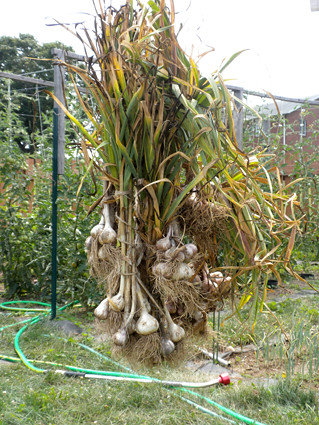
Lots of garlic. We'd pulled some for green garlic throughout the spring, but simply buying a few extra heads from the market last fall has resulted in a real bounty. Behold:

Garlic_small

It's one of those "Take the photo, quick!" moments, as those eighty-ish plants, bundled and held at arm's length, get heavy. Quickly. Half a dozen heads came in for fresh garlic, and the rest are hanging in the garage to cure for four to six weeks. The very best - and there are some large and lovely heads - will hold until this October's planting. The rest are fair game for the kitchen. Due to shifting the garden, we had no garlic harvest last year. Now, I'll be making up for lost time with plenty of roasted garlic.

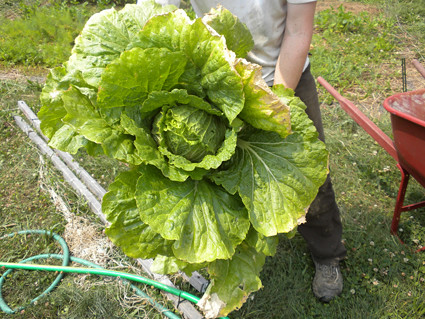
Also in the "unexpected bounty" category: napa cabbage. Now, this may look big, with all of its outer leaves still attached:

Napa cabbage_small

And it is. Very much so. With three more just like it.

I had no idea it would grow this large, but even after trimming, the main head weighs just over five pounds. Plus, there were three small side heads worth keeping. Add in the rest, and I think I might have enough kimchi to last me quite a while. It's been some time since I polished off the last batch, and it seems that another two, maybe three, are justified.

12 June 2011

Mid-June harvest.

Lewisburg.

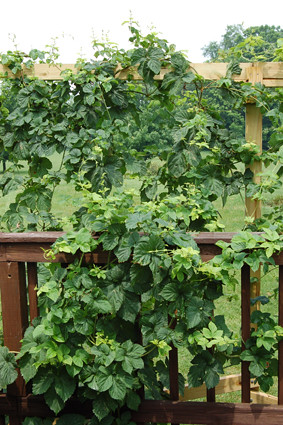
From a spring both cold and unfailingly wet, the weather has surged into the heat of high summer. Mostly dry, too, though the past few days have brought more than two inches of rain, primarily from thunderstorms. Some of the plants are thrilled, including the hops that have overwhelmed their supports, knotting into a fury of bines, leaves, and budding little cones:
Hops

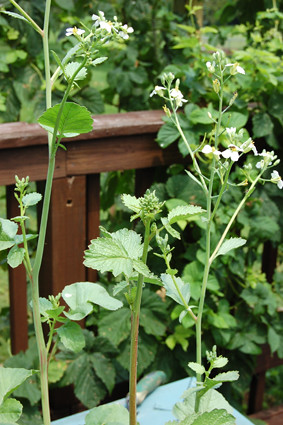
The radishes have been less enthused, racing to bolt before we could pull more than a handful to eat. Still, the seedpods ought to be good for a stir-fry or two:
Radish flowers

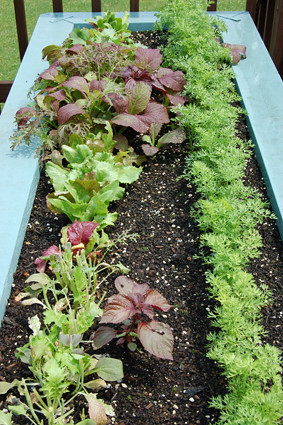
The rest of the deck planters are humming along nicely, providing a handy little salad bar just a few steps from the kitchen:
Salad bar

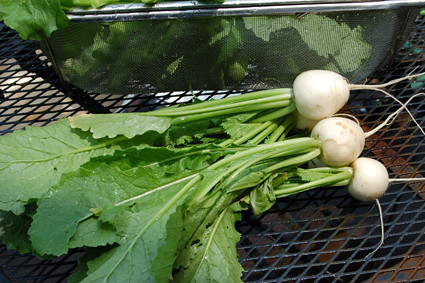
With sweet salad turnips, too:
Turnips

These Hakurei turnips are tough to beat. Sweet, tender, and quick-growing, they've got delicious roots and leaves. The only bits we don't use are the tip of the root and the short section between trimming the root top and the base of the leaves.

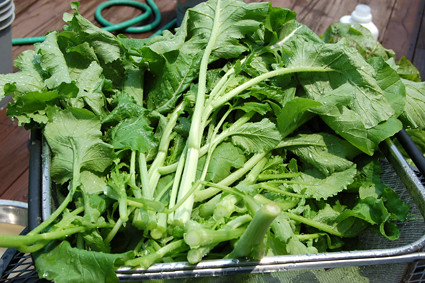
We've also harvested a bunch of broccoli raab, which has grown enormously in the past week:
Raab

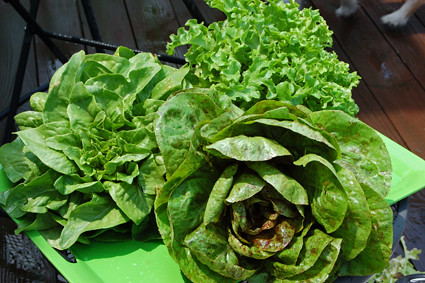
Also lettuces that are threatening to bolt any minute:
Lettuces

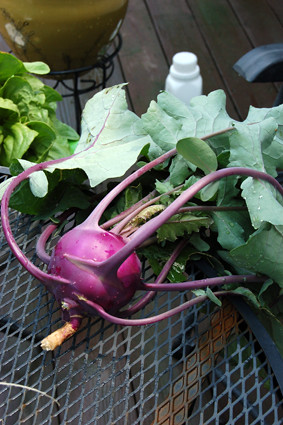
Kohlrabi with pristine leaves, thanks to plenty of rowcover:
Kohlrabi

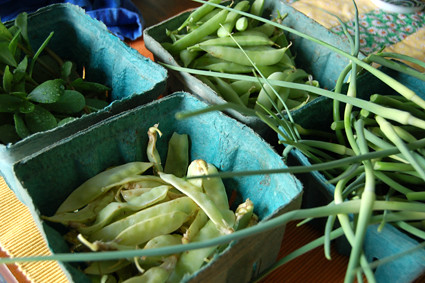
And we've also started into our peas for this season:
Garden harvest

The wet spring delayed planting, and this hotter-than-average weather means they'll likely be a brief treat this year. But at least we get some. The small local farms have, for the most part, skipped peas this year, since they couldn't get them in the ground in time.

On the upside, we've got plenty of purslane - it's having a banner year - which, as far as garden weeds go, is tough to get upset about. And the garlic scapes were too good to resist this morning, so they'll be a treat for as long as they last. Add some fresh strawberries to that, and it's becoming unclear how all of this is possibly going to fit into the refrigerator.

03 June 2011

The garden, in pictures, despite the lack of greenery.

Lewisburg.

It's not much to look at, but there's plenty of garden on its way. June arrived with fierce, hot weather - now tempered - and most everything's in the ground and growing.

Winter squash, melons, watermelon:
SE plot

Pole beans, bush beans, lima beans:
S plot

Tomatoes, peppers, eggplant (yet to transplant):
SW plot

Onions, leeks, garlic:
W plot

Potatoes:
NW plot

Peas, soybeans, carrots, parsnips, fennel, poppies:
N plot

Tomatoes, tomatillos, summer squash, bitter melon:
NE plot

Kohlrabi, broccoli raab, napa cabbage, lettuce, flowers galore:
E plot

And a mashup panorama of the whole thing:
Garden panorama

Click on it for a better view - or at least as big an image as Flickr will handle. You get the gist of it.

28 April 2011

Asparagus.

Lewisburg.

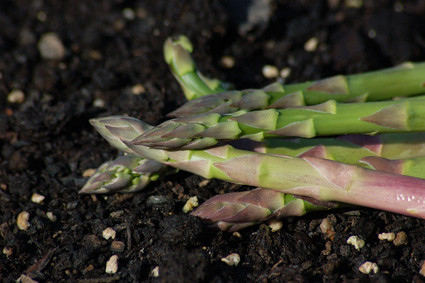
First asparagus of the season:
Asparagus

And, since it's a new patch, the first harvest for us. Ever. It's quite exciting.

25 April 2011

Spring liveliness.

Lewisburg.

I planted my strawberries today - three weeks after they arrived - and I'm pleasantly sore from lugging several yards of soil about the yard. (There's still more to go, but it's less pressing.)

It's getting ickily humid, with thunderstorms potentially arriving any moment, but there's been just enough evening light for a few photos.

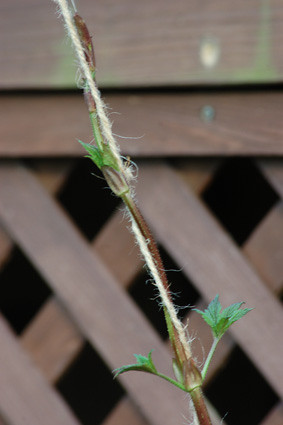
The hops are getting big. Fast. This one's over two feet, from barely finger-length less than two weeks back:
Climbing hops

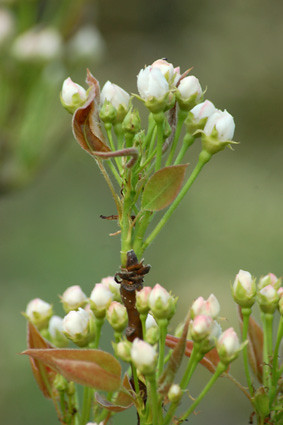
The Asian pears are just about to burst into bloom:
Pear flowers

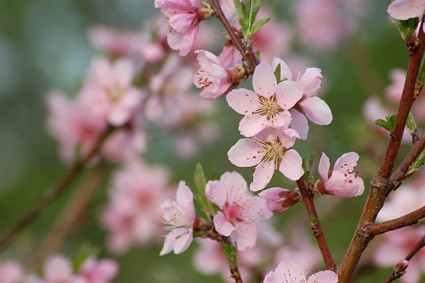
Peaches, on the other hand, aren't waiting:
Peach flowers

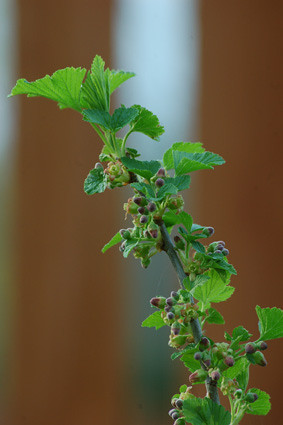
And, as near as I can tell, the blackcurrant bush is happy. It was a sudden gift from our friends Matt and Nina, who moved from Lewisburg last summer. Nina couldn't bear leaving it to be ignored - or worse, torn out - by the subsequent renters, and asked if we'd please take it. The deathly dry August weather didn't give me too much hope for a good relocation, but there wasn't a choice. But, hey, it's looking lively:
Blackcurrant buds

So while I've been doing all this, my neighbors have been mowing their lawns. Ah, the impending tedium.

14 April 2011

Spring pictures.

Lewisburg.

With a little sunshine, it's looking more and more like spring. (That and the two neighbors out on their lawnmowers.)

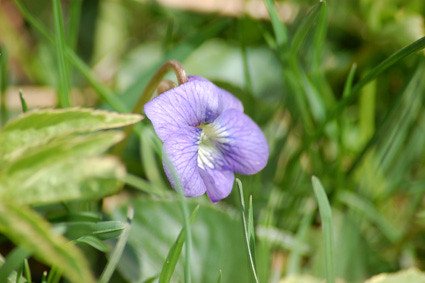
The first violet of the season:

Violet

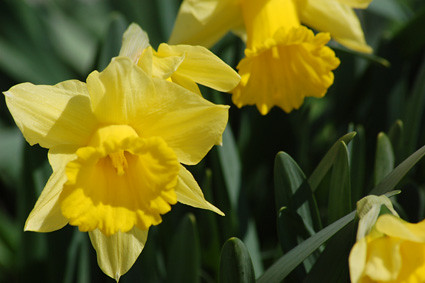
The daffodils are in full bloom:

Daffodil

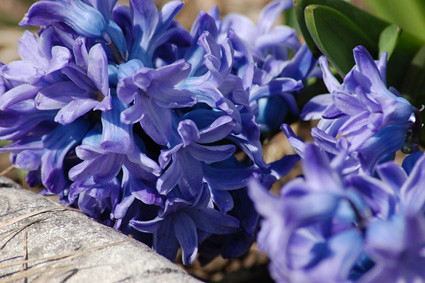
So's the hyancinth. Fragrant, too.

Hyacinth

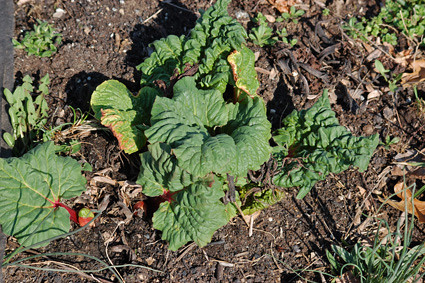
Rhubarb's wasting no time:

Rhubarb

And the hop shoots are coming on fast. With a little luck, I'll finish up the new supports tomorrow - concrete's curing right now - and get the best ones trained.

Hop shoots

The rest, of course, are just another spring vegetable treat.

05 September 2010

Fingerlings.

Lewisburg.

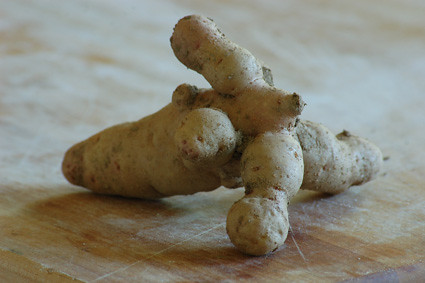
Root vegetables always carry an element of surprise. Carrots and parsnips will twist about each other if they grow too close together. Sometimes they spur off new finger-like taproots. It's impossible to tell, until you've pulled them, whether the turnips and radishes look perfect or terrible. The size and number of potatoes underground is always a mystery.

And fingerling potatoes will sometimes do this:

Knobbly potato

It's a result of inconsistent watering, given our severe lack of rain this season. But, still, a great harvest of spuds, and since I rarely bother peeling potatoes, not a big deal at all.

03 August 2010

Jeow.

Lewisburg.

Summer! It means ripe tomatoes - including the first Green Zebras from the vines today - and chillis and eggplant, all just right for Lao-style jeow. The word means something akin to sauce or dip, particularly in the salsa vein. Something very thin, like fish sauce1, has nam in there someplace, which is the word for water or water-like stuff.

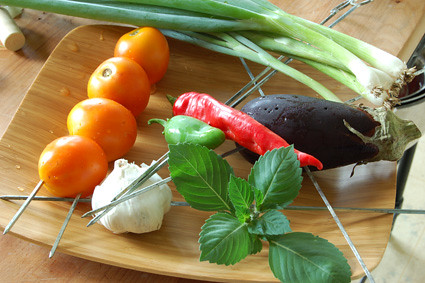
Anyhow. Jeow is a dip that you eat with balls of Lao/Thai sticky rice2, and it's made from whatever's at hand. Start with some good fresh vegetables:

Jeow vegetables

Here: tomatoes, eggplant, chillis, and garlic, all on skewers. Scallions and holy basil for later. Not pictured: fish sauce. If I'd had shallots nearby, they'd be ready to go, too.

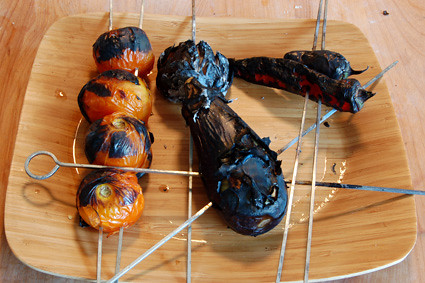
The key, as far as I'm concerned, is fire. Not just the gas flame at the stove, but charcoal. I don't even bother with the grill, but cook it all right over the chimney starter, which is insanely hot. The trick is to cook the vegetables until soft enough to pound in a mortar, and the high heat works to char the hell out of the skins. For one, it makes them easy to peel. Even better is the glorious smokiness that results.

Fire roasted

Tomatoes don't take but a few moments, and the chillis just a hint longer. Garlic and eggplant, though, take enough time to get awesomely smoky. I keep going until the skins are turning to ash at the tips, until they feel soft to the touch. If I could manage it with the tomatoes, I would, but there's a limit to how long I can watch before fearing they'll plummet to the coals, irretrievable.

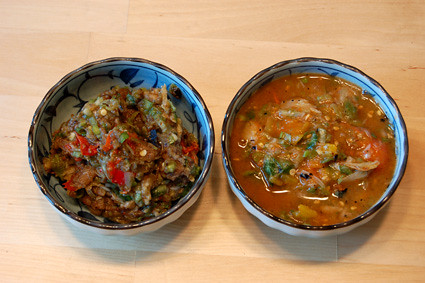
Then it's peel skins, mash coarsely in a mortar, season with fish sauce, basil, cilantro, etc. Eat with sticky rice. I could pretty much call this a meal:

Jeow

Eggplant on the left, with chillis, garlic, scallions, holy basil, fish sauce. Tomato on the right, with garlic, scallions, holy basil, fish sauce. These are the new summer standards.

* * * * *

1Which is a condiment, really, and not a sauce. But "fish condiment" sounds even less appetizing, or else just confusing.

2Not to be confused with sushi rice, which is somewhat sticky, or Japanese sweet rice - since it's also sometimes called sweet rice - which is stickier than sushi rice. Lao sticky rice is super-sticky, requires hours of advance soaking, and must be steamed. But it's unique and delicious, and maybe my favorite rice. Which is really saying something.

01 August 2010

Bitter melon!

Lewisburg.

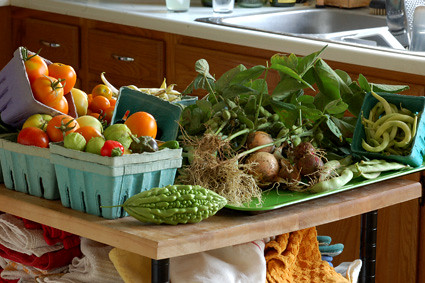
Man, leave town for a few days, and this is what awaits:

Garden bounty

Tomatoes. (Lots.) Tomatillos, zucchini, mini red bell peppers, jalapeno peppers, Lao eggplant, dragon's tongue beans, Sultan's golden crescent beans, tongue of fire beans, onions, scallions, edamame, blackberries, raspberries, and that knobbly fellow in front, the bitter melon. First one of the season, but they're starting to come on strong. And, thus far, looking healthier than I'm used to seeing my cucumbers.

Fingers crossed?

17 July 2010

Duck, you sucker.

Lewisburg.

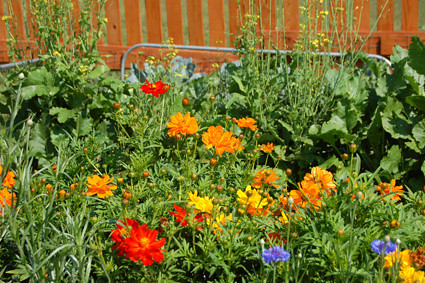
It rained! After nearly three weeks with nary a drop, we've finally had some significant rains recently. Not what we really need, unfortunately, but enough to lend a little help to the regular watering schedule. Rain plus heat means that things are moving along quickly. Flowers, including cosmos, bachelor's buttons, snapdragons, nasturtiums, love-in-a-mist, marigolds, and, uh, broccoli raab, are in bloom:
Cosmos

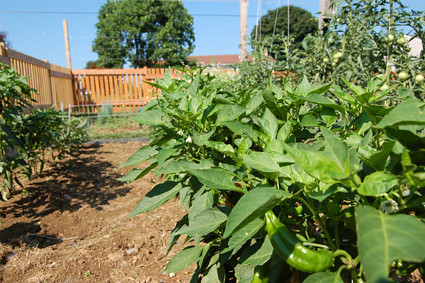
The peppers are big, bushy, and fruiting:
Peppers

Most are from saved seed, and since peppers are more prone to cross-pollination than tomatoes, beans, or some of the others I'm also trying, it's interesting to see what's happening. The jalapenos, for example, are shaped a bit different, and the ones I picked earlier today are fruitier in taste, and less grassy, than those from last year. Near the same heat level, though.

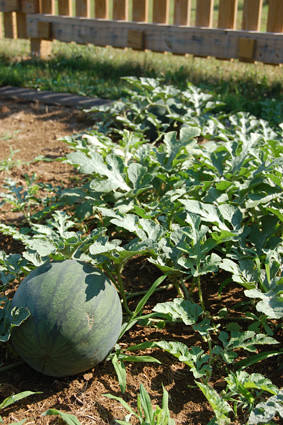
The watermelon may or may not be from saved seeds. I didn't trust the saved seeds, so planted some that were left over from last year, but just about everything came up. And they're loving the heat so far:
Blacktail watermelon

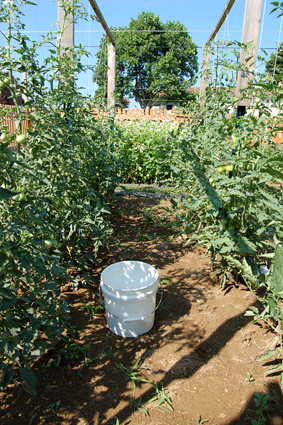
Among the other so-far successes: giant, vigorous buckwheat in flower; sweet carrots big enough to eat as I thin the row; new potatoes; big pole beans flowering like mad. And tomatoes taller than me:
Tomato trellis

The trellis is more than six feet high, and the Sun Golds are just about there.

The main reason they're so tall is that I'm carefully pruning indeterminate tomatoes.1 With big, long vines, they need support - mason twine and greenhouse clips, in my case, hanging from a wooden bar - and benefit from pruning off unnecessary suckers. Like these:
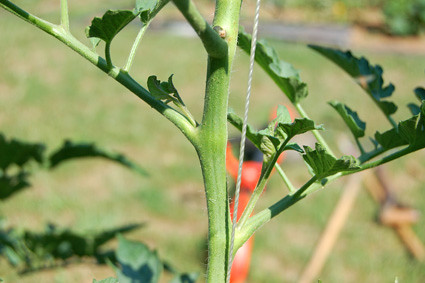
Little suckers

See those little stems growing out between the main stalk and the leaf branches? They're called suckers, and represent a new growth point and vine that'll produce more leaves, more flowers, and more fruit. If I lived in a tropical paradise, with all the time in the world to let these grow, that'd be no problem. But the extra energy necessary to grow them means that they'll slow down fruit production, and give smaller tomatoes. One plant can only do so much.

Pinch or snip them off, and the plant will devote more of its energy to the existing growth points:
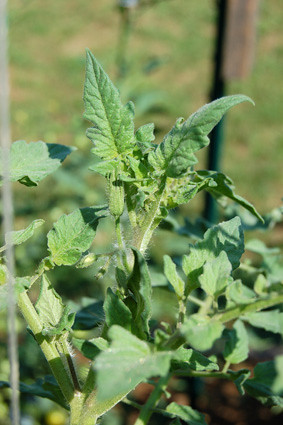
Tomato growth point

It's a tangle of hard-to-see and harder-to-photograph little plant parts, but careful inspection reveals tiny developing leaves, flower buds, and more continually unfurling. It's the heart of the plant's growth, and damaging it means you're limited to what's already below it. Generally speaking, you want to be extra cautious to avoid damage, though clipping the top at the end of the season can force any unripe fruit to ripen more quickly.

For the most part, it's straightforward. Pinch the unwanted suckers. Leave only the ones you intend to keep and train up. I keep one sucker per plant, and plant them with enough space so as to avoid crowding. Every so often, there's one that I've missed, that's just too large to remove, so I'll train that one, as well.

Be aware that there's a pinching procedure. Tiny suckers can simply be pinched off with fingertips, though doing so too close to the main growth point is asking for trouble, especially if you've misidentified what you're supposed to remove. (It happens.) Larger suckers can be broken off, but it's a two-step snap. Bend it left, until you hear the stem break, then bend it the other way to break it off completely. Just going in one direction runs the risk of stripping a swath of the stem's outer layer away, opening up the plant to infection.

Too big, and you need shears or another support.

Ideally, these are the scars you'll see:
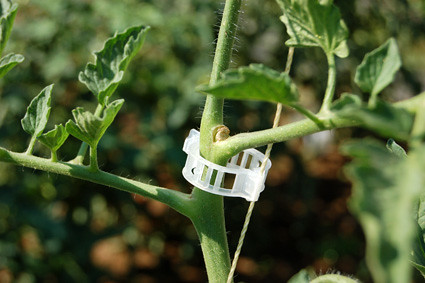
Sucker scar

Here you can see two different-sized scars, likely each pinched off at the same time. One was tiny, the other a bit larger. The smaller ones, I find, are more likely to give you this:
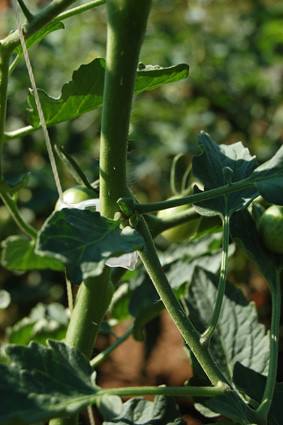
Regrown sucker

Sometimes, a sucker grows back from where it had been pinched off. So you need to check again, lest you miss a new, two-foot tomato plant bursting forth. Relatively easy, right?

If you're growing hybrids, sure. My Sun Golds are clockwork-level predictable. But I can't save seed from them, and there are a number of heirlooms that I really like growing and eating. The problem with heirlooms, though, is that they're less predictable. Whereas a hybrid almost always sends forth suckers from between the leaves and the stalk, with leaves branching out on one side, then later the other, heirlooms sometimes give you this:
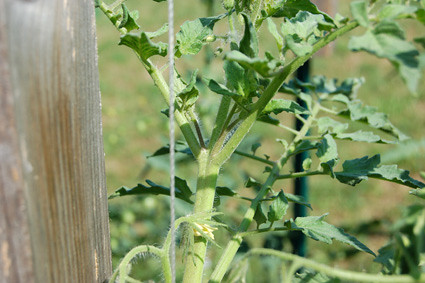
Twin suckers

Leaves twinned off at the same point. Sometimes no big deal. Sometimes, those two suckers are the only remaining growth point, and what had been the growth point is now just a flower cluster. Pinch off those suckers, and that's all the plant you've got.2

The other, just as vexing problem is this:
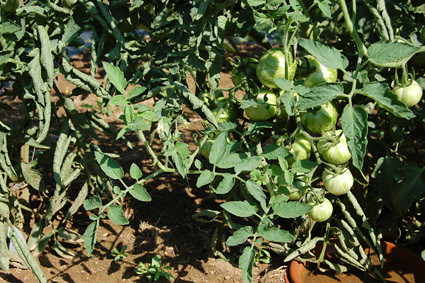
Fruit sucker 1

It's a sucker. Growing from the end of a fruit cluster.
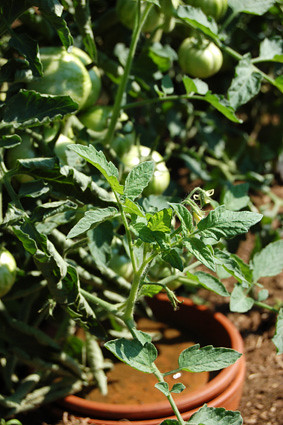
Fruit sucker 2

Not at all where you'll hear about suckers forming, but heirlooms do it all the time. Thus far, I've found them on Black Plums, Wapsipinicon Peaches, Green Zebras (pictured), and Jaune Flammes. I've yet to find them elsewhere, but won't be surprised when I do.

* * * * *

1I have one determinate variety this year, as an experiment. We'll see how it goes.

2My Black Plums insist on doing this. I don't know why, but I have to watch them very carefully because of it. If they weren't such fine tomatoes, I might be bothered.

05 July 2010

First tomatoes.

Lewisburg.

No photo, but we harvested our first tomatoes of the season today. Five ripe red Stupice tomatoes. The first of the Sun Golds will be ready tomorrow.

Not bad for five-and-a-half weeks from transplant.

16 May 2010

Deer-free.

Lewisburg.

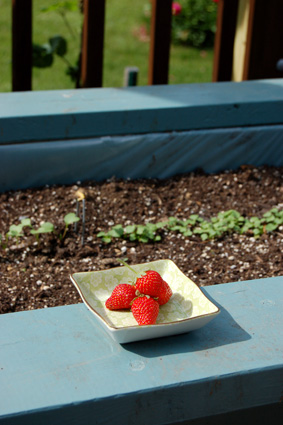
For those who've missed it, it's full-blown gardening season. Around here, at any rate. Gardening + work + bare minimum of effort required to keep dog sane and house from burning down = long days. But it all starts to feel fine once the harvesting begins. We've had a few odds and ends already - hop shoots, which are a bit like asparagus; dandelion and chicory greens; some rhubarb1 - but we're starting to get strawberries:

2010 strawberries

Behind them are the radishes and turnips in the deck-protected planters:

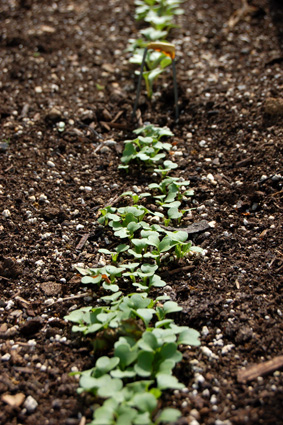
Sprouts

They're tiny, but quick to grow. The downside of planters is that the soil in them is more subject to surrounding air temperature, so seeds here will germinate later than those directly in the earth. The upside, of course, is the ease of harvest and rather effective critter-proofing. If by next year I'm able to construct a set of cold frames, I'll actually be able to put out extra-early plantings of cold-tolerant vegetables to enjoy before the main crops kick off.

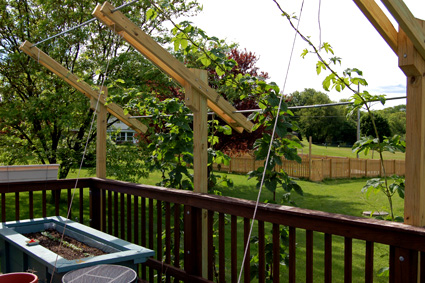
That said, I doubt anything can beat the hops out of the gate.

Hops

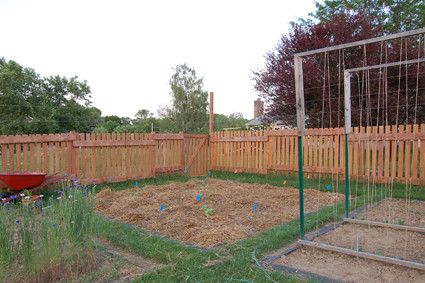
I noticed shoots emerging at the very start of April. Within a week, I'd managed to cobble together a support structure that now, six weeks later, isn't big enough to accommodate the most vigorous bines. Honestly, though, I was rather busy with the rest of the garden. After all, it's all now in here:

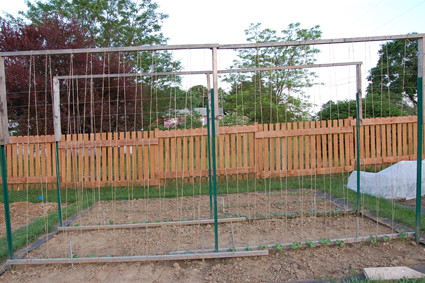
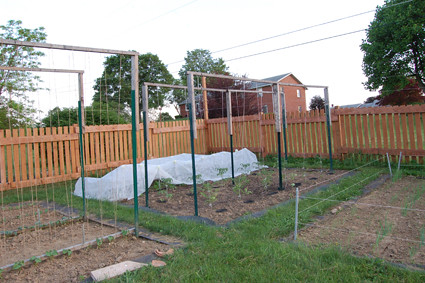
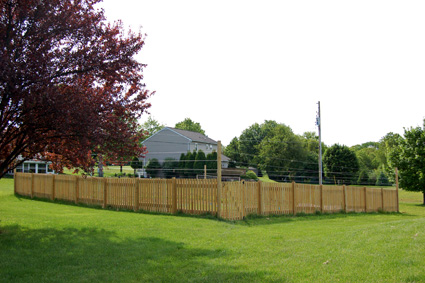
Fence

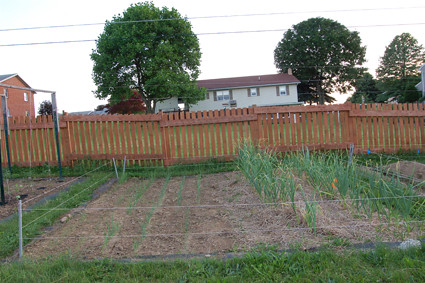
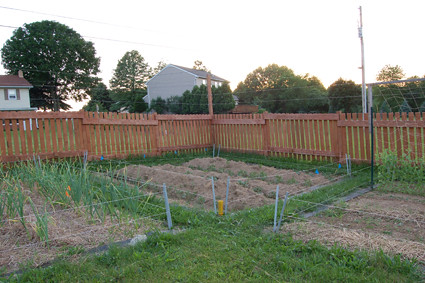
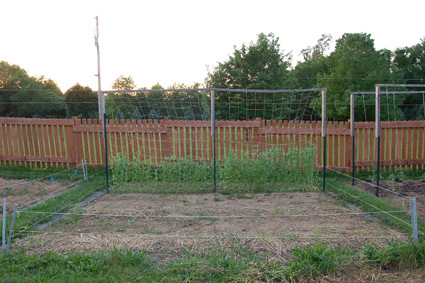
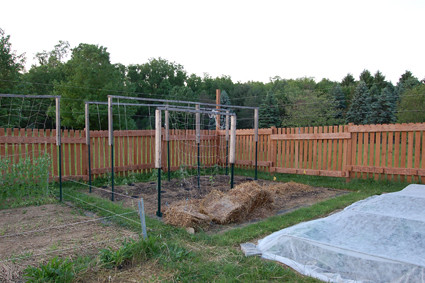
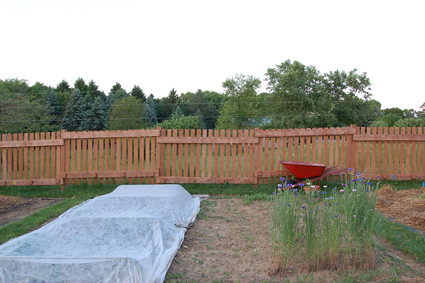
Though the wire mesh guard at the bottom isn't entirely finished - there's evidence of rabbits getting in and nibbling a bit - and we have yet to stain it2, it's essentially complete. Fifty feet square, four and a half feet tall with deer-deterring cables three feet higher, enclosing eight distinct garden plots (each thirteen feet square) and a central picnic space. Seven of eight plots are currently tilled, with the last half-complete.3 This year's seedlings, beneath fluorescent lights in the basement, are doing better than they ever have before, looking in perfect shape to give us plenty to eat, despite this year's smaller garden.

And look:

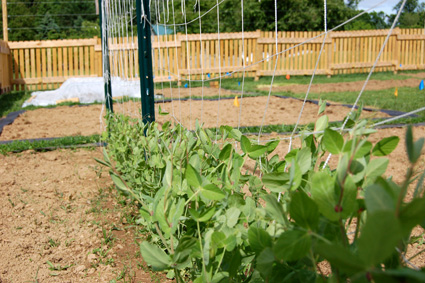
Peas

Peas safe from deer browsing. So worth it.

* * * * *

1Which, as this morning's breakfast can attest, makes for some fine scones. Chop into ¼-inch lengths, toss with sugar, and keep 'em raw. They hold their shape during cooking, but soften up nicely, with their sour flavor intact.

2Enough free time plus two days of rain-free, warm weather seems too much to ask for at the moment.

3In order to keep my head from exploding - it's best, when tackling a major project like a large fence, to maximize its enclosed area and minimize its bill of materials; square is both simple and efficient to construct - the garden is in a new location. So all that ground tilled before? Unused. (Bound for next year's orchard.) Our rototiller? Broken halfway through. Our neighbor's rototiller? Semi-functional, with frustrating carburetor trouble. So it's down to tiller number three to get the job done. Backs and shoulders, for those wondering, are rather sore these days.